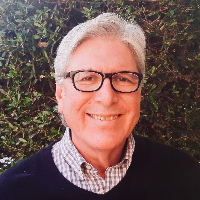
- 26 years experience
- Client-centered care
- Speaks conversational Spanish
About Arthur
Dr. Arthur Magana is a clinical psychologist with deep experience helping people navigate hard moments. He practices in California and brings a calm, conversational style to sessions. He aims to hear beyond surface words and recognize a person's emotional reality and strengths.
He has worked in mental health for many years and earned his license as a California Psychologist, CA Psychologist 18143. His background includes training at the University of California, Antioch University, and the School of Professional Psychology in San Francisco. Early doctoral work at the Institute for Integral Studies and years of workshops shaped a multi-modal outlook.
His past roles include work in child protection, early child development and infant-toddler mental health, foster care and adoption, inpatient psychiatry, and social service program supervision. He also practiced at the Institute for Bipolar Spectrum Disorders in Folsom, California. Those experiences helped him see clients as whole people, not just a list of symptoms.
In sessions he uses practical conversation, curiosity, and respectful listening. He values humor and looks for each person's strengths while helping them build on what works. He draws from a range of approaches to match the needs people bring to therapy.
He speaks conversational Spanish and conducts work in English. With 26 years of experience, he combines clinical knowledge and lived perspective as a father, husband, and teacher. If the reader wants to move toward clearer self-understanding, he invites them to take the next step.
He has worked in mental health for many years and earned his license as a California Psychologist, CA Psychologist 18143. His background includes training at the University of California, Antioch University, and the School of Professional Psychology in San Francisco. Early doctoral work at the Institute for Integral Studies and years of workshops shaped a multi-modal outlook.
His past roles include work in child protection, early child development and infant-toddler mental health, foster care and adoption, inpatient psychiatry, and social service program supervision. He also practiced at the Institute for Bipolar Spectrum Disorders in Folsom, California. Those experiences helped him see clients as whole people, not just a list of symptoms.
In sessions he uses practical conversation, curiosity, and respectful listening. He values humor and looks for each person's strengths while helping them build on what works. He draws from a range of approaches to match the needs people bring to therapy.
He speaks conversational Spanish and conducts work in English. With 26 years of experience, he combines clinical knowledge and lived perspective as a father, husband, and teacher. If the reader wants to move toward clearer self-understanding, he invites them to take the next step.